Introduction
I never expected to be thinking about Derik Queen from the SNL cast while standing on a mountain trail, but sometimes the mind makes unexpected connections. It was during one of those transitional season hikes where the weather couldn’t decide between autumn crispness and winter’s approach that I first properly appreciated what a good fleece jacket could do. The air had that particular chill that seeps through ordinary layers, and I found myself wishing for something that could handle both the physical exertion of climbing and the changing atmospheric conditions. This wasn’t about finding the perfect piece of gear so much as understanding how the right clothing could transform an experience from endurance to enjoyment.
Real-life Context
My hiking routine typically involves early morning starts when the world still feels asleep, and the trails belong mostly to the wildlife. I’ve learned through experience that these cooler seasons demand particular attention to layering—too much insulation leads to sweating during ascents, while too little leaves you shivering during breaks. The challenge has always been finding that middle ground where comfort meets functionality. On this particular day, I was testing a new route that combined forest paths with open ridge lines, meaning exposure to wind and potential precipitation would vary dramatically throughout the journey. I needed something that could adapt without requiring constant adjustments or carrying multiple layers in my pack.
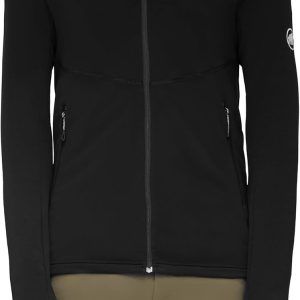
The Mammut Aconcagua Light ML Hooded Jacket entered my life during this period of seasonal transition. Its straight fit and lightweight construction appealed to me because I’ve always disliked the bulkiness of traditional outdoor jackets that make you feel like you’re wearing a sleeping bag. Having tried various mid-layers over the years, I was curious about the Polartec Power Grid fleece technology mentioned in the description, particularly the moisture management claims. Outdoor activities in cooler weather often create this uncomfortable cycle where you sweat during exertion then freeze when you stop moving, and I was hoping this jacket might break that pattern.
Choosing the marine color was an aesthetic decision—something that wouldn’t show trail dust too obviously but still provided visibility against the grays and browns of the late autumn landscape. The size selection proved straightforward since the straight fit meant I didn’t need to size up for layering purposes. What intrigued me most was the promise of water repellency combined with breathability, two features that often seem mutually exclusive in outdoor gear. I’ve been disappointed before by jackets that claimed to do both but ultimately sacrificed one for the other, so I approached this with measured expectations.
Observation
The first thing I noticed during that initial hike was how the jacket felt almost weightless when I pulled it from my backpack. At just 35 x 30 x 6 cm when packed, it took up minimal space, leaving room for other essentials. As I began ascending through the forest section, the morning chill still clung to the air, and the jacket provided immediate warmth without that tifling feeling I’ve experienced with heavier fleeces. The elastic construction allowed complete freedom of movement—no tightness across the shoulders when reaching for handholds or that restrictive feeling when scrambling over rocks. This was particularly noticeable during steeper sections where I needed full range of motion.
About an hour into the hike, as the trail opened onto the first ridge line, a light wind picked up, carrying with it a fine mist that wasn’t quite rain but enough to dampen ordinary clothing. I watched as the water beaded up on the jacket’s surface and rolled off rather than soaking through. The water-repellent finish was handling this light precipitation exactly as described, and I appreciated not having to stop to put on a shell layer for such minor moisture. What surprised me more was that despite the protection from external dampness, I didn’t feel any buildup of internal moisture from my own exertion. The breathability was evident in how dry I remained even during the more strenuous climbing sections.
When I reached the summit and stopped for a break, the temperature had dropped noticeably with the altitude gain, and a proper wind now swept across the exposed rocks. I pulled up the snug hood and found it stayed securely in place without needing constant adjustment. The helmet compatibility mentioned in the product details wasn’t relevant for this particular hike, but the secure fit impressed me nonetheless. As I sat eating a snack, watching the clouds move across the valley below, I realized I wasn’t experiencing that usual post-exertion chill that often accompanies breaks during cool-weather activities. The insulation was maintaining my core temperature without overheating, striking that elusive balance I’d been seeking.
Throughout the descent, which involved different muscle groups and a changed pace, the jacket continued to perform consistently. The moisture management became particularly apparent as my activity level decreased—where other fleeces might have felt clammy as sweat cooled, this one maintained a comfortable dry feel against my skin. The straight fit proved ideal for layering when temperatures dropped further in the shaded forest sections, sliding easily over my base layer without bunching or restricting movement. By the time I returned to the trailhead, the jacket had experienced everything from morning chill to wind exposure to light precipitation and varying levels of physical exertion, adapting seamlessly to each condition.
Reflection
I didn’t realize at the time that this would become my go-to layer for so many different scenarios beyond that initial hike. The jacket’s versatility has surprised me in how it transitions from trail to town without looking out of place. The marine color works equally well against mountain backdrops and urban environments, and the minimalist design doesn’t scream technical outdoor gear in casual settings. This has made it valuable beyond my initial expectations—it’s become something I grab automatically when heading out the door in cooler weather, whether for outdoor activities or everyday errands.
What stands out in retrospect is how the jacket’s performance characteristics align with a more thoughtful approach to outdoor gear. The use of recycled polyester speaks to sustainability considerations that many active people now value, though this wasn’t my primary concern initially. The quick-drying capability has proven useful not just during activities but afterward—hanging the jacket to air out between uses, it’s ready much sooner than other fleeces I’ve owned. This practical aspect has integrated seamlessly into my routine, becoming one of those small but appreciated details that enhance daily life.
The straight fit has proven more valuable than I initially appreciated. Unlike athletic cuts that can feel restrictive or loose fits that billow in wind, this balanced approach works well for various body types and activity levels. I’ve worn it over everything from thin base layers to moderate insulation layers as temperatures have dropped further into winter, and the fit remains consistent and comfortable. This adaptability means it serves well across a range of conditions rather than being limited to specific temperature ranges or activity types.
Reflecting on the water-repellent feature, I’ve come to appreciate it for more than just trail use. Light rain during dog walks or unexpected drizzle while running errands no longer requires switching to a dedicated rain jacket. The protection against light precipitation has made this a more versatile piece in my wardrobe than I anticipated. Similarly, the breathability has proven valuable in various scenarios beyond hiking—during brisk walks, outdoor work, or even as an extra layer in drafty spaces. The jacket seems to understand the principle that good design should adapt to life rather than requiring life to adapt to the design.
Conclusion
That initial hike now feels like a proper introduction rather than just a test run. The Mammut Aconcagua Light ML Hooded Jacket has become a reliable companion through the changing seasons, offering consistent performance across diverse conditions. Its lightweight nature means it’s often the first layer I pack, knowing it will handle whatever the day might bring without adding significant weight or bulk. The moisture management continues to impress during activities that vary in intensity, maintaining comfort whether I’m moving steadily or taking extended breaks.
The straight fit and elastic construction have proven their worth through repeated use, providing freedom of movement without sacrificing coverage or protection. I’ve come to appreciate details like the secure hood and water-repellent surface as thoughtful additions that enhance functionality without complicating the design. These elements work together seamlessly, creating a piece that feels intentionally designed for real-world use rather than optimized for specifications alone.
What began as solution for transitional weather hiking has evolved into a versatile layer that serves across multiple aspects of an active lifestyle. The jacket bridges the gap between technical performance and everyday usability in a way that feels both practical and thoughtful. It demonstrates how good design can create gear that adapts to the user’s needs rather than demanding adaptation to the gear’s limitations. This alignment between design intention and real-world application has made it a valued part of my outdoor and casual wardrobe.
Through various adventures and daily use, the jacket has maintained its performance characteristics without showing significant wear. The color has remained vibrant despite exposure to sun and weather, and the fabric retains its elasticity and water-repellent properties after multiple machine washes. This durability reinforces the value of investing in well-designed outdoor gear—pieces that not only perform initially but continue to do so over time. The jacket has earned its place as a reliable choice for cool-weather activities, offering the combination of comfort, protection, and versatility that active lifestyles require.